

With more than 400 clinics in 38 states, Milan Laser is the country’s largest provider of laser hair removal. We also offer something nobody else in the industry does: our exclusive Unlimited Package™. You pay one price for a body area, and you’re covered for life. No hidden costs or touch-up fees. Choosing Milan for your hair-free needs will help you say goodbye to unwanted hair for good.

If you have thick, coarse hair, laser hair removal may work better for you than for almost anyone else. Coarse, dark hair contains more melanin, giving the laser a stronger, more precise target, and tends to respond exceptionally well to treatment. Here's what that means session by session.
The Good News? Coarse Hair Responds Exceptionally Well To Laser
The mechanism behind laser hair removal depends on melanin. The laser emits a wavelength that melanin in the hair follicle absorbs, converting that energy to heat, which disables the follicle's ability to produce hair. Coarse, dark hair contains more melanin per follicle than fine or light hair, meaning it gives the laser more to work with at every session.
For Clients with coarse, dark hair, this translates to strong, reliable laser targeting. The follicle absorbs laser energy effectively, the heat generated is sufficient to disable the follicle, and the result is meaningful reduction that builds progressively over a consistent treatment course.
The ideal candidate profile for laser hair removal (coarse, dark hair on lighter to medium skin tones) is a description that applies to a significant portion of the Clients who pursue it. If that describes you, the honest answer is that you're in a strong position to see excellent results.
How Coarse Hair Behaves Across a Treatment Series
Coarse hair tends to show visible changes relatively early in a treatment course. In the one to two weeks following each session, treated hairs shed from the follicle, a sign the laser successfully targeted actively growing follicles. For Clients with coarse hair, this shedding can be particularly noticeable given the visibility and density of the hair before treatment.
Over successive sessions, the character of any regrowth changes. Hair that does grow back tends to be finer and lighter than the original. Areas that were previously dense with coarse hair begin to thin noticeably as each session addresses a new set of actively growing follicles.
What stays consistent regardless of hair type is the need to complete the full recommended treatment course. The laser can only permanently disable follicles in their active growth phase, and because not all follicles are active simultaneously, multiple sessions spaced at the right intervals are essential for comprehensive reduction. Staying consistent with the treatment schedule is the single most important factor in getting the best results from coarse hair treatment.
Body Areas Where Coarse Hair Is Most Common
Bikini and Brazilian
The bikini and Brazilian areas are among the most common treatment areas for Clients with coarse hair concerns. Terminal hair in this area tends to be dense and coarse, characteristics that make it highly responsive to laser treatment.
Underarms
Underarm hair is typically coarse and dark for most Clients. Many Clients notice significant reduction in this area relatively early in their treatment course.
Legs
Leg hair varies in coarseness by individual, but Clients with coarser, dark leg hair tend to see strong results given the melanin content of the follicles being targeted. The larger surface area of leg treatment means more follicles to address across the course of treatment, but the hair characteristics support effective targeting.
Beard line and upper lip
Hair in androgen-sensitive facial areas tends to be coarser and darker than typical body hair.
Back and chest
For male Clients, back and chest hair is often among the coarsest on the body. The density of hair in these areas means a more comprehensive treatment course, but the coarse hair characteristics work in the Client's favor at every session. The hair still needs to be dark to be treatable.
Does Hair Thickness Affect How Many Sessions You Need?
Coarse hair's strong laser response means each session can be highly effective at targeting active follicles. But the number of sessions needed still depends on the same variables that apply to every Client: the hair growth cycle, the treatment area, and individual factors including skin tone, hair color, and hormonal activity.
The reason multiple sessions are needed isn't hair type; it's the hair growth cycle. The laser can only permanently disable follicles in their active growth phase. Because follicles in any given area cycle through active and dormant phases independently, only a portion are treatable at any single session. Each appointment addresses a new set of actively growing follicles, building cumulative reduction over time.
For areas with very dense hair coverage, a full back or heavy beard area, for example, the sheer number of follicles means the treatment course may be longer than for less dense areas. Density and coarseness are related but distinct variables: coarse hair responds strongly per follicle, but high follicle density means more follicles to address overall.
Provider Adjustments for Coarse or Dense Hair
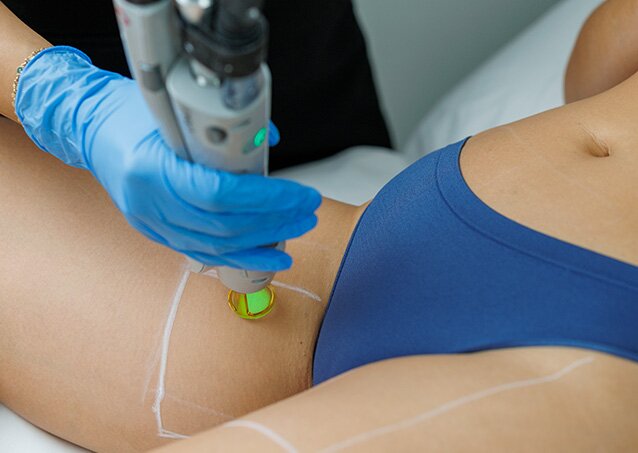
At Milan Laser, every treatment is customized to the individual Client. Your Provider assesses your skin tone using the Fitzpatrick Scale as a guide at every session and adjusts fluence and pulse duration accordingly. For coarse or dense hair, settings are adjusted to the specific characteristics of the treatment area. No two sessions are assumed to be identical, and no Client is treated with a one-size approach.
The Chiller, a separate cooling device, delivers continuous cool air throughout every session. Consistent surface cooling is particularly relevant when treating denser areas, supporting both comfort and skin safety throughout the appointment.
Milan's Unlimited Package™ is especially well-suited for Clients treating dense hair areas. A single flat fee covers every session needed to reach permanent hair reduction, plus lifetime touch-ups at no additional cost. So the number of sessions a dense treatment area requires never becomes a financial concern.

Coarse hair tends to show visible changes relatively early in a treatment course.”
Why Milan Laser Is The Best Option
Start Your Journey Today
Discover the game-changing benefits of laser hair removal for yourself with a free consultation. This conversation is an opportunity to discuss goals, concerns, and expectations to determine a personalized treatment plan. Visit MilanLaser.com or any of our clinics across the country and join the hair-free movement today!
Frequently Asked Questions
Yes, coarse, dark hair is among the most responsive hair types for laser hair removal. Higher melanin content in dark coarse follicles means the laser has a stronger, more precise target at every session, and follicles absorb laser energy more effectively than fine or light hair does. This doesn't mean the treatment course is shorter. Multiple sessions are still needed to address follicles across their growth cycles, but the per-session effectiveness tends to be strong for coarse hair types.
The number of sessions varies based on individual factors including hair density, skin tone, and how hair growth cycles respond over the course of treatment. There's no single answer that applies to every Client. What's consistent is that staying on schedule and completing the full recommended course gives you the best chance at lasting reduction, and Milan's Unlimited Package™ covers every session needed to get there.
Yes. Beard hair tends to be coarse and dark, characteristics that make it highly responsive to laser targeting. Treatment in the beard area addresses the hair growth that can cause razor bumps, ingrown hairs, and folliculitis for many Clients. Settings are customized to each Client's skin tone using the Fitzpatrick Scale as a guide, and the appropriate wavelength is selected based on that assessment.
Not necessarily more sessions, but the variables are different. Coarse, dark hair responds strongly per session due to its higher melanin content. Fine or light hair may require more sessions because each session is less effective at the follicle level. Dense areas with coarse hair may require a longer treatment course due to the number of follicles involved, but hair coarseness itself is a favorable characteristic for laser, not a limiting one.
