<link rel="stylesheet" href="https://cdn.jsdelivr.net/npm/instantsearch.css@8.0.0/themes/satellite-min.css"/>

Living with psoriasis doesn't mean traditional hair removal products or laser treatments are off limits. But it does mean treatment requires careful planning. Let's break down how psoriasis affects laser and skin safety, what precautions are necessary, and when treatment may be a viable option for managing unwanted hair.

What Psoriasis Is and How It Affects The Skin

Psoriasis is a chronic inflammatory autoimmune disease that occurs when the immune system causes skin cells to grow faster than normal. This rapid cell turnover leads to a buildup of cells on the skin's surface.

Common symptoms include scaly,inflamed patches, plaques, redness, and increased sensitivity in affected areas. These symptoms can appear anywhere on the body and vary in severity from person to person. Unlike atopic dermatitis and eczema, psoriasis plaques are typically thicker and more defined.

During flare-ups, the skin barrier becomes compromised. This makes it more vulnerable to irritation, infection, and external triggers, a concern with many chronic skin diseases. That's why careful treatment planning is essential for anyone considering laser hair removal.

Why Psoriasis Matters For Laser Hair Removal

Inflamed skin is more reactive to heat, which is a core component of laser hair removal. When psoriasis is active, the skin's heightened sensitivity increases the likelihood of discomfort or adverse reactions during treatment.

Higher risk of irritation or prolonged healing exists in areas affected by psoriasis. The compromised skin barrier struggles to recover as quickly as healthy or normal-appearing skin, which can extend post-treatment sensitivity.

Skin injuries or trauma can sometimes trigger new psoriasis flare-ups, the Koebner phenomenon. This is true for many hair removal methods, such as waxing, shaving with a manual or electric razor, or depilatory creams.

Can You Get Laser Hair Removal If You Have Psoriasis?

Psoriasis does not automatically disqualify you from getting laser hair removal. Many people with psoriasis can safely get treatment when their condition is properly managed, and the skin is stable and appears normal.

Active plaques and lesions are typically avoided during laser sessions. Treating inflamed or broken skin increases the risk of complications, so Providers will assess your skin’s condition before proceeding with each treatment.

Your Provider may recommend waiting until inflammation subsides to ensure your skin can tolerate the laser safely and heal properly afterward.

Areas That May Be Treated vs. Areas To Avoid

Clear, unaffected, normal-appearing skin may be treatable with laser removal when psoriasis is well-managed. These areas can often tolerate treatment similarly to skin without psoriasis, though close monitoring is still essential.

Some body areas may be more sensitive than others, even without active psoriasis. Areas prone to frequent flare-ups or with a history of Koebner response (new skin lesions) may need longer intervals between sessions.

What To Expect From Treatment Planning

Treatment schedules may be adjusted based on your psoriasis activity. Instead of standard five-week intervals, sessions might be spaced further apart. Any normal-appearing skin can be treated at each appointment while the areas of flared psoriasis are avoided.

Ongoing skin monitoring is important throughout your laser hair removal journey. Providers will assess your skin at each visit.

If clients are concerned, they may receive test spots before a full treatment.

Potential Skin Risks And How They’re Reduced

Temporary skin irritation or redness can occur after laser hair removal, even on healthy skin. For people with psoriasis, these reactions may be more pronounced or last longer due to the skin's underlying sensitivity.

Risk increases significantly when treating active psoriasis; this is why Providers avoid active plaques and treat stable, clear skin.

Proper evaluation helps minimize post-treatment symptoms. A thorough skin assessment before each session allows Providers to identify problem areas, assess treatable skin, and determine where it’s safe to proceed with treatment that day.

Quote mark

Many people with psoriasis can safely get treatment when their condition is properly managed, and the skin is stable and appears normal.”

Why Milan Laser Is the Best Option

Milan Laser provides medically based care with treatments performed under medical oversight by trained Providers. Treatment plans are customized based on skin condition, sensitivity, and treatment area, with active flare-ups avoided to protect skin health. Consistent protocols and modern laser technology prioritize safety at every step.

With more than 400 clinics in 38 states, Milan Laser is the country’s largest provider of laser hair removal. We also offer something nobody else in the industry does: our exclusive Unlimited Package™. You pay one price for a body area, and you’re covered for life. No hidden costs or touch-up fees. Choosing Milan for your hair-free needs will help you say goodbye to unwanted hair for good.
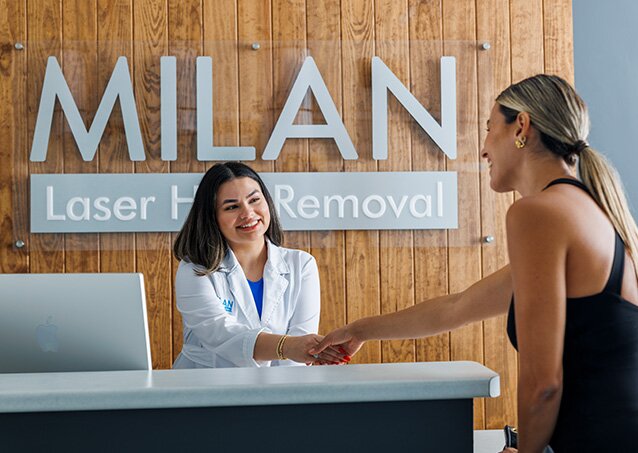

Woman shaking the hand of a Milan employee just before getting laser hair removal with psoriasis

Start Your Journey Today

Discover the game-changing benefits of laser hair removal for yourself with a free consultation. This conversation is an opportunity to discuss goals, concerns, and expectations to determine a personalized treatment plan. Visit MilanLaser.com or any of our clinics across the country and join the hair-free movement today!

Milan Laser consultation session

Frequently Asked Questions

Laser hair removal can potentially trigger psoriasis flare-ups if performed on active plaques or inflamed skin, especially in people prone to the Koebner response. However, when treatment is limited to clear, stable skin and proper precautions are taken, the risk is significantly reduced. Professional evaluation before each session helps determine whether it's safe to proceed.

No, laser hair removal is not recommended during an active psoriasis flare-up. Treating inflamed or compromised skin increases the risk of irritation, prolonged healing, and potentially worsening the flare. Providers will wait until the skin has cleared before proceeding with treatment.

Laser hair removal can potentially trigger the Koebner phenomenon in some individuals, where skin trauma causes psoriasis to develop in previously unaffected areas. This is why professional Providers treat only clear, stable skin and use conservative treatments to minimize risk. With proper evaluation and treatment planning, many people with psoriasis undergo laser hair removal safely.

Book Your Free Consult

Select a location from the list

Find Milan Near You?
OR