

With more than 400 clinics in 38 states, Milan Laser is the country’s largest provider of laser hair removal. We also offer something nobody else in the industry does: our exclusive Unlimited Package™. You pay one price for a body area, and you’re covered for life. No hidden costs or touch-up fees. Choosing Milan for your hair-free needs will help you say goodbye to unwanted hair for good.

Laser hair removal is a safe, effective path to long-term hair reduction, but "performed correctly" is doing a lot of work in that sentence. The quality of care, equipment, and clinical standards varies widely from clinic to clinic, and knowing what to look for can make a significant difference in both your safety and your results. This guide breaks down what the evidence says, what standards every clinic should meet, and how Milan approaches each one.
Is Laser Hair Removal Safe? Understanding the Evidence
What clinical research says about safety
Laser hair removal has been studied extensively. Hundreds of studies conducted over more than two decades consistently support its safety profile when performed by trained professionals using appropriate equipment. The majority of people who undergo laser hair removal find it safe and well-tolerated, and there have been no studies showing any long-term health risks associated with the procedure.
One concern that sometimes comes up is radiation. Laser hair removal uses light energy to target hair follicles; it does not use UV light or ionizing radiation, which are the types associated with skin cancer and cellular damage. The wavelengths used in laser hair removal are less energetic and do not penetrate deep enough to affect internal organs or genetic material.
At Milan Laser, temporary side effects are uncommon and occur in only about 1% of treatments.
Common side effects vs. serious complications
Understanding the difference between a normal, expected response and a true complication helps set realistic expectations and supports informed decision-making.
Normal, expected responses following treatment include:
- Redness and swelling around the hair follicles, which typically resolves within 24 to 72 hours
- A warm, mild sunburn-like sensation in the treated area for a few hours after treatment
- Temporary bumpiness around treated follicles, a sign the treatment is working
These are not complications. They are the body's expected response to an effective treatment.
Less common adverse effects, which are minimized significantly when proper protocols are followed, can include temporary pigment changes, burns, or histamine reactions. The risk of these outcomes is reduced substantially by sun avoidance before and after treatment, arriving at appointments at your natural skin tone, and receiving care from trained professionals using properly calibrated equipment.
Who should avoid laser hair removal
Laser hair removal is not appropriate for everyone. Contraindications include:
- Pregnancy
- Anyone under 16 years of age
- Skin that is currently tanned or sunburned in the treatment area
- Anyone currently undergoing chemotherapy or radiation for active cancer
- Active skin conditions such as open wounds or active herpes outbreaks in the treatment area
- Treatment on scalps or orifices
Many other conditions, including autoimmune conditions, vitiligo, melasma, and scarring, do not prevent treatment, provided the skin in the treatment area appears normal. A thorough pre-treatment assessment is essential for identifying any considerations before beginning.
Safety Protocols Every Laser Clinic Should Follow
Pre-treatment skin assessment
Every treatment should begin with a thorough assessment of the Client's skin. This includes using the Fitzpatrick Scale as a guide, which is a clinically recognized framework for helping determine the appropriate laser type for each individual. Treating without this assessment increases the risk of adverse effects, particularly for Clients with medium to dark skin tones.
Providers should also assess whether the Client's skin is at its natural baseline tone. Tanned skin, regardless of how the tan was acquired, creates additional targets for the laser and significantly increases the risk of burns and pigment changes. Treatment should not proceed if the skin is not at baseline.
Proper eye protection for Clients and Providers
Laser energy poses a real risk to the eyes. Every reputable clinic should provide appropriate protective eyewear to both the Client and the Provider before any treatment begins. Special precautions are taken at Milan to avoid firing the laser near the eyes of either the Client or Provider. Permanent eye injury is prevented with proper eye protection, laser use, and correct protocol.
Test spots for safety concerns
When there are any safety considerations, including uncertainty about a Client's skin tone, a new treatment area, or any question about how the skin may respond, test spots may be placed in or near the treatment area before proceeding with a full treatment. Test spots allow the Provider to assess the skin's response before committing to a complete session. If test spots are performed, full treatment can follow at least three days later, no exceptions.
Emergency procedures and equipment
A reputable clinic should have clear procedures in place for managing adverse responses. This includes knowing how to recognize and respond to unexpected skin reactions, having appropriate aftercare resources available, and maintaining open communication with Clients about what to watch for after treatment.
Hygiene Standards You Should Expect
A clean, well-maintained treatment environment is a basic standard, not a differentiator. Here's what every laser hair removal clinic should be doing as a matter of routine.
Equipment sanitization between Clients
Laser handpieces and any surfaces that come into contact with a Client's skin should be properly sanitized between every appointment. This is a non-negotiable standard regardless of the treatment area or session length.
Supplies and applicators
Any supplies that come into direct contact with the skin are sanitized with a hospital-grade disinfectant.
Clean treatment environment
Treatment rooms should be visibly clean and professionally maintained. Linens and coverings are changed between Clients. Any reusable items in the treatment space should be properly cleaned and stored. A clinic that doesn't take its physical environment seriously is unlikely to take its clinical standards seriously either.
Hand hygiene protocols
Providers follow proper hand hygiene protocols before and after every treatment. This is a fundamental standard in any healthcare-adjacent setting and should be practiced consistently regardless of whether gloves are worn.
How Laser Hair Removal Is Regulated in the U.S.
State-level regulation overview
Laser hair removal regulation in the United States is primarily governed at the state level, which means requirements vary significantly depending on where a clinic operates. Some states require treatments to be performed by or under the supervision of a licensed medical professional. Others have less stringent requirements that may allow non-medical personnel to operate laser equipment with limited oversight. Milan Laser only hires licensed medical professionals with physician oversight at all clinics.
This inconsistency in state-level regulation is one of the reasons the quality of care varies so widely across the industry. Consumers in states with minimal oversight may receive treatment from providers with limited training and no medical supervision, a meaningful safety gap that isn't always visible from the outside.
FDA role in device regulation
While states regulate who can perform laser hair removal, the FDA regulates the devices themselves. Laser systems used for hair removal must be FDA-cleared before they can be legally marketed and used in the U.S. FDA clearance means the device has been reviewed and found to be safe and effective for its intended use based on existing evidence.
It is important to note the distinction: laser devices are FDA-cleared, not FDA-approved. These are different designations, and the accurate term for laser hair removal equipment is always "FDA-cleared."
Who can legally operate laser equipment
State requirements for laser operators range from licensed physicians and nurses to aestheticians with varying levels of specialized training, depending on the state. In states with stronger oversight requirements, laser treatments must be performed by or directly supervised by a licensed medical professional. In states with weaker requirements, the bar is lower, which is why asking about provider qualifications and medical oversight at any clinic you're considering is a reasonable and informed question.
How Milan Laser Exceeds Standard Safety Requirements
Medical director oversight at every location
Every Milan Clinic operates under the oversight of a specially trained and licensed physician medical director. Milan's protocols are developed and reviewed annually by a Milan physician and serve as the standards of care for every treatment at every location.
This means that regardless of which state a Client is treated in, or what that state's minimum requirements happen to be, the level of medical oversight at Milan is consistent and physician-directed.
This is not the industry standard. It is Milan's standard.
A training model built on exclusive protocol
Every treatment at Milan is performed by a licensed medical professional following Milan's exclusive medical protocol. Upon completing Milan's Provider training, each Provider is considered a Candela Authorized Laser Hair Removal Provider.
The training is built around Milan's physician-reviewed protocol, not a generalized curriculum, which means every Provider at every location is working from the same clinically grounded foundation.
Technology designed for safety across all skin tones
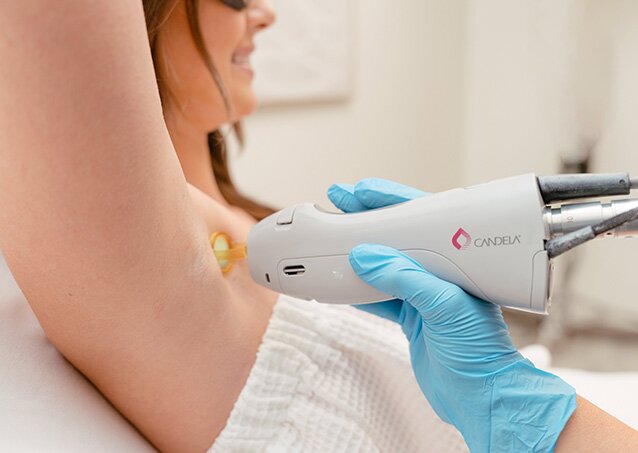
Milan uses the FDA-cleared Candela GentleMax Pro at every location, a professional-grade laser system that combines two laser types to safely and effectively treat all Fitzpatrick Skin Types. The Alexandrite laser is used for lighter skin tones; the YAG laser is used for medium to dark skin tones. Using the Fitzpatrick Scale as a guide is the foundation of a safe, customized treatment plan.
The Chiller, a separate cooling device that connects with the laser at the handpiece, delivers continuous cool air to the skin throughout treatment, supporting both comfort and safety at every session.

A clean, well-maintained treatment environment is a basic standard, not a differentiator.”
Why Milan Laser Is The Best Option
Start Your Journey Today
Discover the game-changing benefits of laser hair removal for yourself with a free consultation. This conversation is an opportunity to discuss goals, concerns, and expectations to determine a personalized treatment plan. Visit MilanLaser.com or any of our clinics across the country and join the hair-free movement today!
Frequently Asked Questions
At a minimum, look for clinics using FDA-cleared laser equipment and employing licensed medical professionals. In states that require medical oversight, treatments should be performed by or under the direct supervision of a licensed provider. Clinics operating under physician oversight, with protocols reviewed by a licensed physician, offer a higher standard of care than those without medical direction. At Milan, every location operates under the oversight of a physician medical director, and every treatment follows Milan's exclusive medical protocol.
Trust your observations. Treatment rooms should be visibly clean, linens should be changed between Clients, and Providers should follow proper hand hygiene before treatment. Equipment should be sanitized between every appointment. If a clinic doesn't meet these basic standards in what you can see, it's reasonable to question what you can't.
The good news is that laser hair removal is a safe procedure, and the vast majority of risks associated with it are preventable when the right protocols are in place. Proper skin assessment before every treatment ensures the laser is customized to your skin tone, significantly reducing the chance of unwanted responses. Appropriate eye protection keeps both Clients and Providers safe throughout the session. Hospital-grade disinfection of any supplies that come into direct contact with the skin maintains a clean, professional treatment environment. Choosing a provider that uses FDA-cleared equipment and operates under physician-directed medical protocols is the most effective way to ensure your experience is safe, comfortable, and effective from start to finish.
