<link rel="stylesheet" href="https://cdn.jsdelivr.net/npm/instantsearch.css@8.0.0/themes/satellite-min.css"/>

Dark spots and light patches are valid concerns, especially for first-time clients. But skin discoloration from laser hair removal is uncommon, and in most cases, preventable. The right technology, properly calibrated settings, and a trained provider make all the difference between a safe treatment and an avoidable risk.

Can Laser Hair Removal Cause Skin Discoloration?

The short answer is yes, but context matters. Skin discoloration following laser hair removal is uncommon, and in most cases, temporary.

The laser beam is designed to target pigment in the hair follicle, not the surrounding skin. When the correct settings are used by a trained provider, the skin itself is largely protected throughout the process. However, in some cases, the surrounding skin can be affected, resulting in either hyperpigmentation, where the skin appears darker than usual, or hypopigmentation, where lighter patches develop in the treated area.

Both are possible side effects when contributing factors are present, such as recent sun exposure, incorrect settings, or heightened skin sensitivity. The good news is that most cases resolve on their own over time with proper care and sun protection, with few long-term effects when treatment is performed correctly.

Why Discoloration Can Happen

Understanding the factors behind skin discoloration helps put the risk in perspective. And most of them are preventable with the right preparation and provider.

Treating recently tanned or sunburned skin, or skin already showing signs of sun damage, is one of the most common contributing factors. When recent tanning or sun exposure increases melanin production in the surrounding skin, the laser has a harder time distinguishing between the hair follicles and the tissue around it, which increases the likelihood of a pigment response. The same risk applies when the wrong wavelength is used for a given skin tone. Mismatched technology can affect the skin in ways that proper settings would avoid.

Overly aggressive laser settings and energy levels are another factor, particularly when they aren't adjusted to the individual's skin and hair type. And for some people, personal history, such as a tendency toward pigmentation changes or heightened skin sensitivity, makes careful evaluation before treatment especially important.

Read Next: Does Laser Hair Removal Lighten Skin?

Who May Be At Higher Risk

While discoloration can affect anyone, certain factors can raise the likelihood. Knowing them upfront leads to better preparation and more realistic expectations.

All skin tones on the Fitzpatrick skin type scale require careful technology selection and precise settings. Choosing the correct wavelength is imperative to prevent interaction with melanin in the surrounding skin. And that is why at Milan Laser the Candela GentleMax can safely treat all skin tones.

Individuals with a history of post-inflammatory hyperpigmentation or uneven skin pigmentation can be worth noting, as their skin is more prone to pigment responses following any kind of irritation or trauma. And for anyone who skips pre- or post-treatment care instructions, the risk increases. Sun exposure, harsh products, and poor aftercare all contribute to how the skin responds. As always, white and gray hairs don't respond to laser treatment due to their lack of pigment, which is worth keeping in mind when setting expectations.

How To Reduce The Risk

The good news is that most discoloration risk is manageable, and a lot of it comes down to preparation, protection, and choosing the right provider.

Protecting your skin pigment by avoiding sun exposure and tanning before and after treatment is one of the most impactful steps you can take. Arriving at each session without tanned skin and with your natural skin tone gives your provider the clearest baseline to work from and reduces the chance of an unwanted pigment response. Avoiding tanning beds and consistent broad-spectrum sunscreen use between sessions keeps that baseline protected throughout the entire treatment plan.

Following treatment guidelines for pre- and post-care instructions carefully removes a significant variable from the equation. Skipping steps, even small ones, can affect how your skin responds and increase risk unnecessarily.

And perhaps most importantly, choosing a clinic with medical oversight and customizable technology, including options like the Alexandrite laser, Nd:YAG laser, and air-cooling devices, ensures that settings are matched to your specific skin tone and hair type at every session, which is where the real protection begins.

Read Next: Is Milan Laser Hair Removal Safe?

What To Do If You Notice Discoloration

Noticing a change in your skin tone after treatment can be alarming. But it's important not to panic or take matters into your own hands. The first step is to contact your provider for an evaluation.

A trained eye can assess what's happening, determine the likely cause, and guide you toward the right course of action. Avoid the temptation to self-treat with harsh products, strong actives, or anything abrasive. Those can cause additional skin irritation, aggravate the affected area, and slow the recovery process.

Most mild pigment changes improve gradually on their own with proper care and consistent sun protection. Patience and the right guidance go a long way, and staying in close communication with your Milan provider about your treatment schedule throughout the process is always the best approach.

Quote mark

When the correct settings are used by a trained provider, the skin itself is largely protected throughout the process.”

Why Milan Laser Is The Best Option

Preventing skin discoloration requires proper evaluation and precise calibration. Milan’s treatments are performed under medical oversight by trained providers who assess your skin tone, recent sun exposure, and medical history before every session. Settings are customized to your skin type to help balance effectiveness with safety.

With more than 400 clinics in 38 states, Milan Laser is the country’s largest provider of laser hair removal. We also offer something nobody else in the industry does: our exclusive Unlimited Package™. You pay one price for a body area, and you’re covered for life. No hidden costs or touch-up fees. Choosing Milan for your hair-free needs will help you say goodbye to unwanted hair for good.
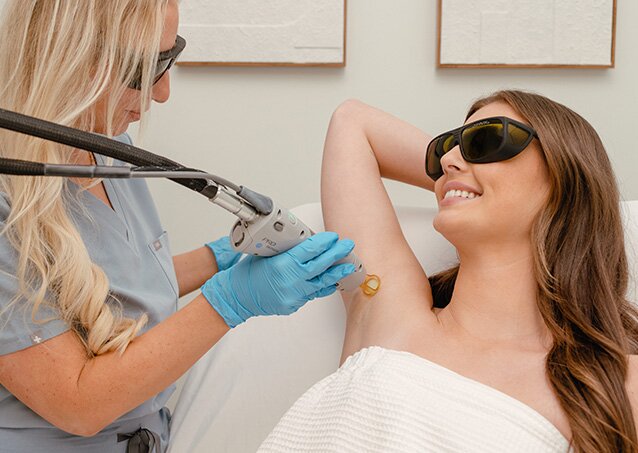
A woman wrapped in a white towel receives laser hair removal on her underarm from a Milan Provider in an image for a blog titled Can Laser Hair Removal Cause Skin Discoloration?

Start Your Journey Today

Discover the game-changing benefits of laser hair removal for yourself with a free consultation. This conversation is an opportunity to discuss goals, concerns, and expectations to determine a personalized treatment plan. Visit MilanLaser.com or any of our clinics across the country and join the hair-free movement today!

Milan Laser consultation session

Frequently Asked Questions

Hyperpigmentation after laser hair removal is uncommon when treatments are performed with the correct settings by a trained provider. It's more likely when contributing factors like recent sun exposure or mismatched technology are present, both of which can be minimized with proper preparation and provider selection.

In most cases, pigment changes following laser hair removal are temporary and resolve over time with proper care and sun protection. Permanent discoloration is extremely rare.

Yes. Laser hair removal can be performed safely on darker skin tones when the correct wavelength and settings are used. Technology like the Nd:YAG laser is specifically designed with deeper complexions in mind, and a trained provider with experience across a range of skin tones is essential for safe, effective treatment.

Most temporary pigment changes resolve on their own within a few weeks to a few months with proper care and consistent sun protection. The timeline varies based on the individual, skin tone, and how well aftercare instructions are followed. 

Yes, sun exposure before or after treatment is one of the most common contributing factors to pigmentation changes. Tanned or sunburned skin has more melanin in the surrounding tissue, which increases the risk of a pigment response. Consistent sunscreen use and avoiding tanning between sessions significantly reduces that risk.

Book Your Free Consult

Select a location from the list

Find Milan Near You?
OR